Roof Repairs
Repairs across Ryde and Eastwood, where end-of-life terracotta and gutters overwhelmed on steep blocks cause most leaks.
Learn more →Clean, rebed, repoint and recoat ageing tile roofs across the Ryde district. Honest advice on whether terracotta is worth restoring. Free inspection.
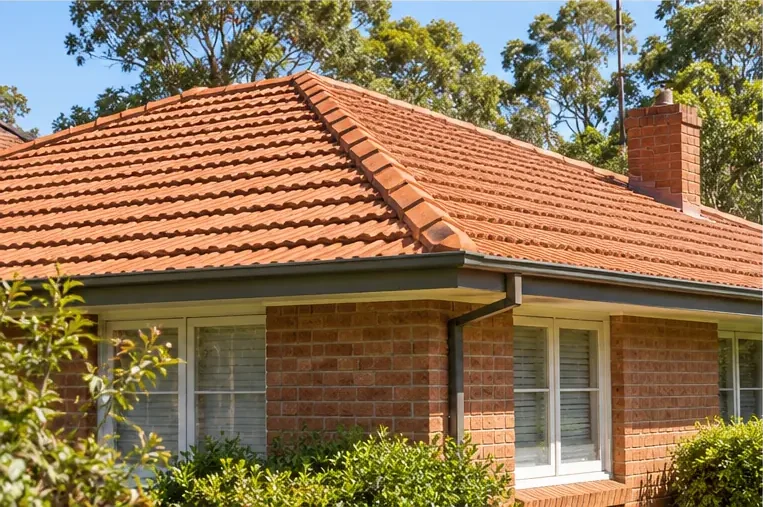
Restoration is maintenance work on a tile roof that still has life in it, and there is a lot of that work on the ridge suburbs — Denistone, Denistone West, West Ryde and the Eastwood streets around Terry Road, where the terracotta is original and the mortar holding it is not. Done properly, restoration buys years, sometimes a couple of decades, for a fraction of a re-roof. Done as a wash-and-spray, it hides faults for a season and then they come back.
A genuine restoration on an inter-war or post-war tile roof means:
Call (02) 9100 0199 for a free inspection and a written quote with each of those items priced separately.
Most of the tile roofs we look at through Ryde, West Ryde, Denistone, Denistone West, Eastwood and Marsfield are sitting on brick houses built between the wars and in the two decades after. The tiles themselves are frequently original. The mortar is not original by design — it is just original by neglect.
Rigid mortar and a roof that expands all summer and contracts all night are a bad combination. The bedding goes drummy, the pointing cracks, and water starts running under the capping along the ridge and hip lines instead of over the top of it. Because the entry point is at the apex, the water gets a long clear run along a batten before it drops, which is why the ceiling stain so rarely sits under the fault.
Australian Standard AS 2050 covers how tile roofs and their capping are set, and the reason we point in a flexible compound is simply that it moves with the roof.
We will say so. The honest no-go signs:
In those cases the money is better spent on roof replacement, and we would rather quote that than sell you a coating that fails.
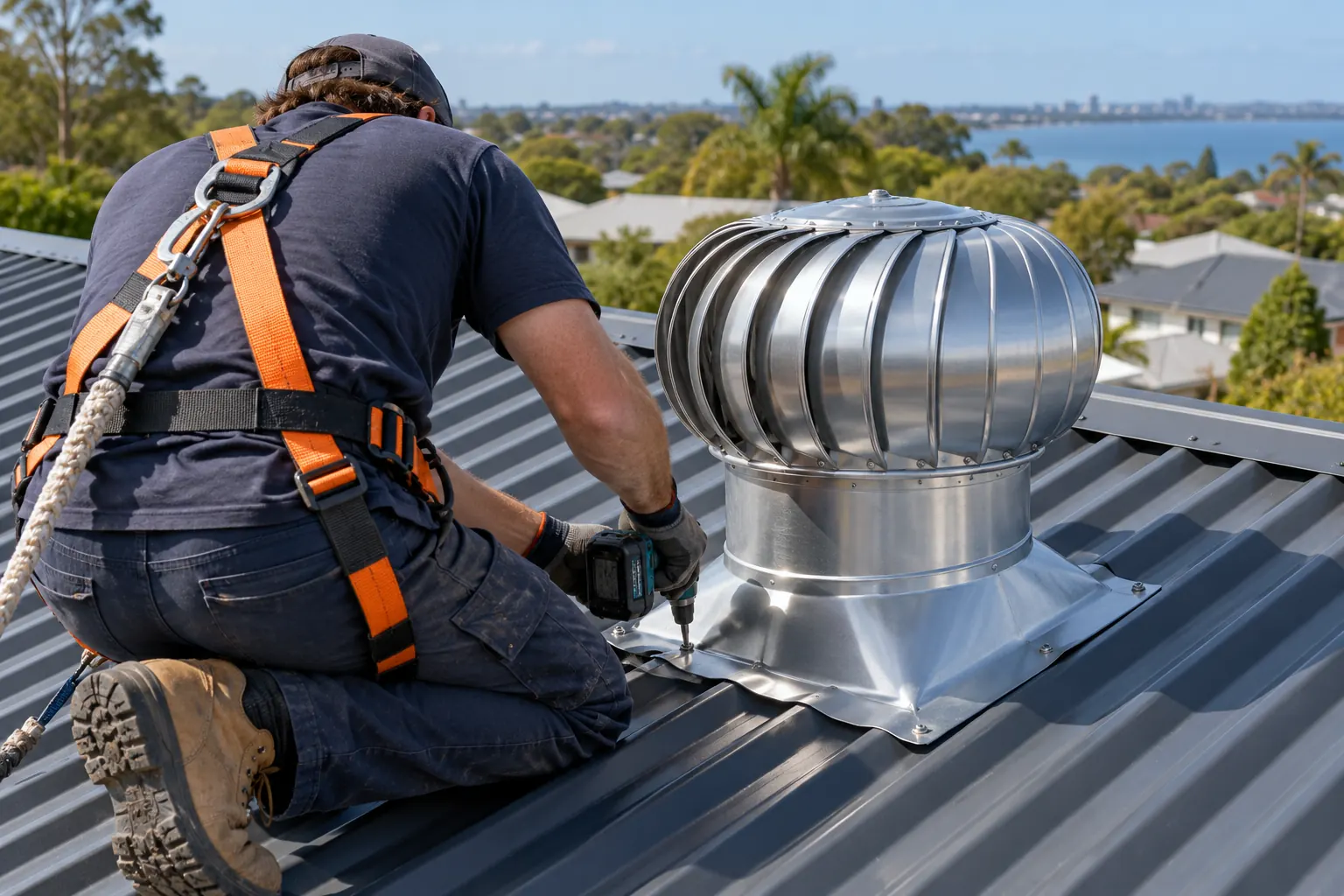
While the roof is open is the sensible time to deal with a hot, unventilated roof space. Vents or whirlybirds let the heat and moist air out, which helps the ceiling below and keeps condensation off the underside of the tiles. It is a small item on a restoration quote and a much bigger job to retrofit on its own.
Restoration and heritage are generally compatible, because restoration keeps the existing material rather than changing it. That is an advantage inside the City of Ryde heritage conservation areas and in the Hunters Hill municipality, where changing material is the thing that attracts scrutiny.
Two caveats. Colour-coating a roof in a conservation area changes the appearance of the building, so it is worth checking the controls before you choose a colour. And genuine slate is not a restoration candidate in this sense at all — slate is repaired as slate, with lead properly dressed and individual slates refixed, which is handled under roof repairs.
Work is carried out by established, licensed and insured roofing contractors working to NSW Fair Trading requirements. Residential building work over $5,000 including GST in NSW requires a licence and a written contract, and completed work carries a written workmanship warranty.
Price depends on roof area and pitch, how many tiles need replacing, how much capping has to be rebedded rather than just repointed, the valley and flashing work found at inspection, and access. We inspect, then quote in writing.
Call (02) 9100 0199 or use the form. Restoration is one of the most common jobs we arrange in Denistone, Denistone West, West Ryde and Eastwood — see the full list of areas we cover.
Repairs across Ryde and Eastwood, where end-of-life terracotta and gutters overwhelmed on steep blocks cause most leaks.
Learn more →Re-roofing inter-war bungalows across Ryde, and the low-pitch and near-flat sections on 1960s walk-ups.
Learn more →Colorbond roofing across the Ryde district, including tile-to-metal conversions on low-pitch roofs.
Learn more →Gutter and downpipe upgrades across Ryde, sized for the runoff a steep block actually concentrates.
Learn more →Storm response across Ryde, Eastwood and Gladesville after heavy rain and wind.
Learn more →Roof inspections and written reports across the Ryde district, including slate and heritage roofs at Hunters Hill.
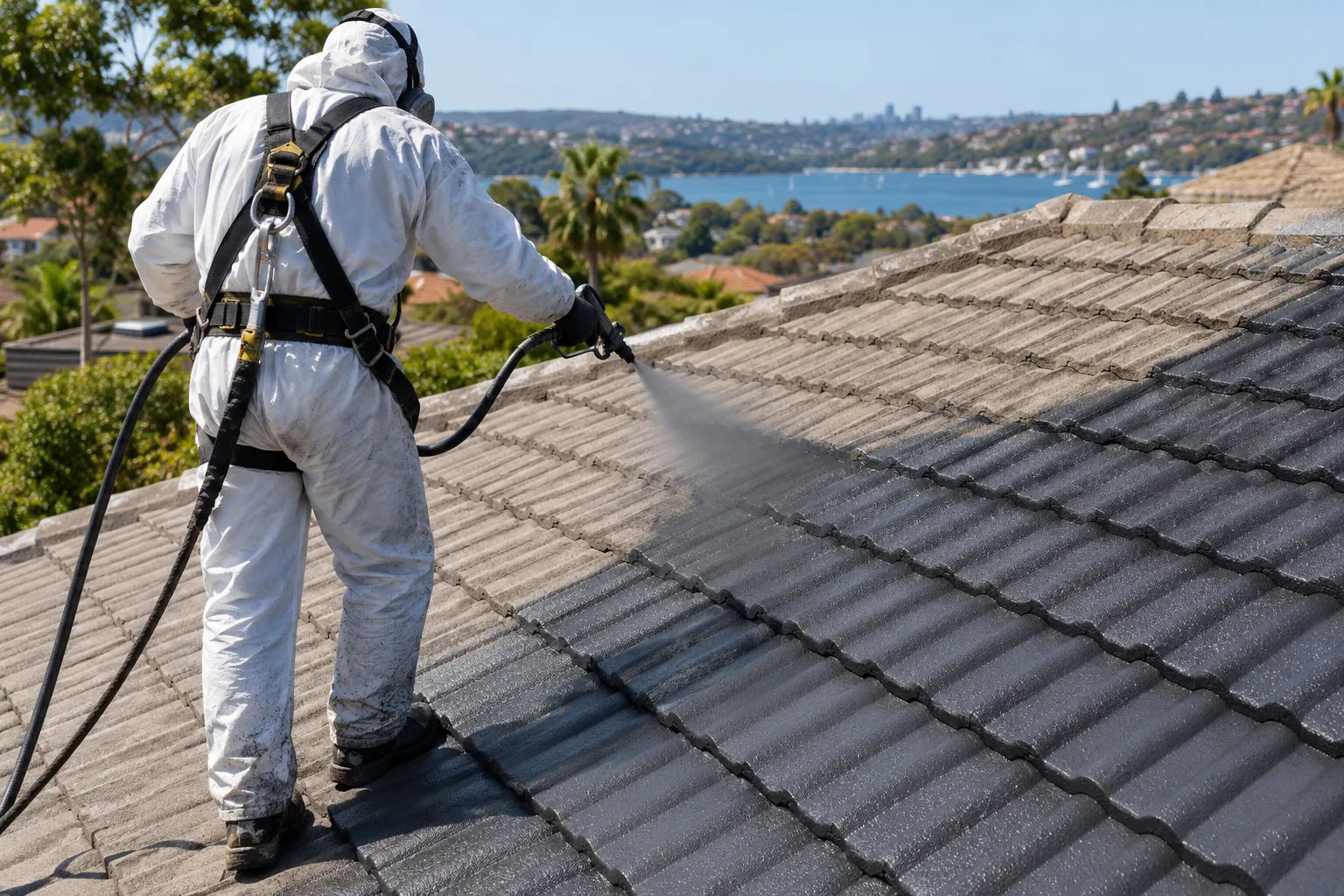
Learn more →A wash removes the moss and dirt and changes how the roof looks for a season or two. A restoration is structural maintenance: broken tiles replaced, ridge and hip capping lifted and rebedded, fresh flexible pointing, valleys cleared or replaced, flashings checked, and only then a sealer and coating where the tile will take it. The cleaning is the first step of a restoration, not the product. If someone quotes a cheap price for a pressure wash and a spray, you are buying the look without the repair.
Not if the tile itself has gone. Unglazed terracotta grows porous with age and holds moisture, moss and lichen on the surface, and a coating applied over a tile that is already breaking down will lift. The decision point is the condition of the body of the tile. Where the tiles are still sound, sealing and coating genuinely extends their service and sheds water better. Where they snap when handled, restoration is the wrong spend and we will tell you that.
The pointing is the clock. Traditional sand and cement pointing cracks as the roof moves and heats, which is usually what has failed on the roofs we are called to. A flexible pointing compound lasts considerably longer because it moves instead of cracking. Beyond that, what shortens the interval here is leaf load from the established gums and the slope of the block, both of which keep gutters and valleys holding water.
Yes, but access is a real line in the quote rather than an afterthought. A great many houses on the ridges running down toward Glades Bay, Morrisons Bay and the Lane Cove River are single-storey at the street and two storeys at the rear. That means edge protection, longer ladder or scaffold set-ups and more time spent moving safely around the roof. It is the same work, it just takes longer, and we price it honestly rather than discovering it on day one.
It often fixes it, because the most common leak paths on an old tile roof — cracked pointing, drummy bedding, broken tiles, blocked or rusted valleys — are exactly what a restoration addresses. What restoration does not fix is a failed flashing at a chimney or parapet, a drainage problem, or rotten battens, so we inspect for those separately and quote them as repairs if they are present. Either way the leak has to be found before the roof is coated.
Tell us what you need and we'll get straight back to you. Prefer to talk? Call (02) 9100 0199 and speak to someone local.
Call (02) 9100 0199